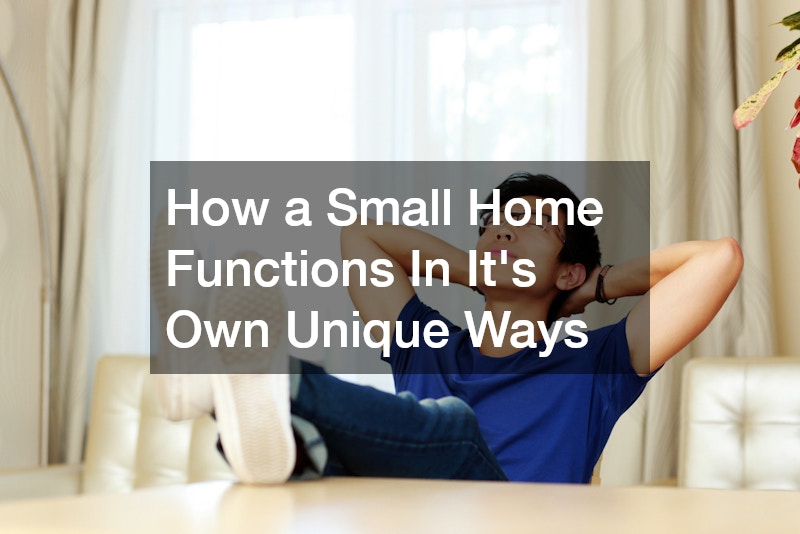
Living in a small home offers a completely distinct experience compared to residing in a sprawling house. Rather than feeling restricted, many individuals find that downsizing or choosing a modest footprint encourages a more deliberate, organised and connected lifestyle. A small home does not merely mimic the operations of a larger property on a reduced scale; it operates through its own clever mechanics, spatial efficiency and daily rhythms.
Understanding how a small home functions reveals the subtle design choices and habits that make these spaces both practical and enjoyable to live in.
Purpose-Driven Spatial Dynamics
In a traditional, larger property, rooms often serve single, dedicated purposes that lie unused for long stretches of the day. A small home, however, relies on dynamic spatial function.
Every square metre is designed to adapt to various needs throughout the day. A living room might serve as a morning yoga zone, a daytime remote workspace and an evening entertainment hub.
This multi-functional reality changes how inhabitants interact with their surroundings. Furniture choices become critical to everyday function. Multi-purpose pieces — such as ottomans with hidden storage, extendable dining tables and sofa beds — allow the interior layout to shift based on immediate requirements. Because spaces must transition quickly from one activity to another, a small home naturally fosters a culture of tidiness and immediate organisation.
The Mechanics of Storage & Layout
Storage in a small home requires a strategic approach that utilises vertical space rather than floor area. Traditional houses often rely on spare bedrooms or large garages to hold excess belongings. In contrast, a compact dwelling relies on clever built-in solutions and smart organisational systems.
Key functional storage strategies commonly found in a small home include:
- Built-in floor-to-ceiling joinery that captures previously unused vertical space above doorways and windows
- Under-furniture utilisation, such as bed bases with integrated drawers or lift-up mattresses
- Dual-purpose architectural features, including window seats with concealed chests or recessed wall niches
- Wall-mounted modular shelving systems that can be reconfigured as storage needs evolve over time
By elevating storage solutions off the ground level, a small home preserves essential floor area, creating an open atmosphere despite the limited footprint.
Energy Efficiency & Environmental Benefits
From an operational perspective, a small home is inherently resource-efficient. Heating and cooling a compact area requires significantly less energy compared to a standard suburban house. In Australia, where summer heat and winter drafts can impact utility bills, the reduced volume of air inside a small home allows split systems or passive ventilation to regulate temperature quickly and cost-effectively.
Cleaning and ongoing maintenance are similarly streamlined. Maintaining a small home requires a fraction of the time, effort and physical resources needed for a larger residence. Fewer materials are consumed during repairs or cosmetic upgrades, making ongoing upkeep far less demanding on both time and finances.
Emotional & Social Functions
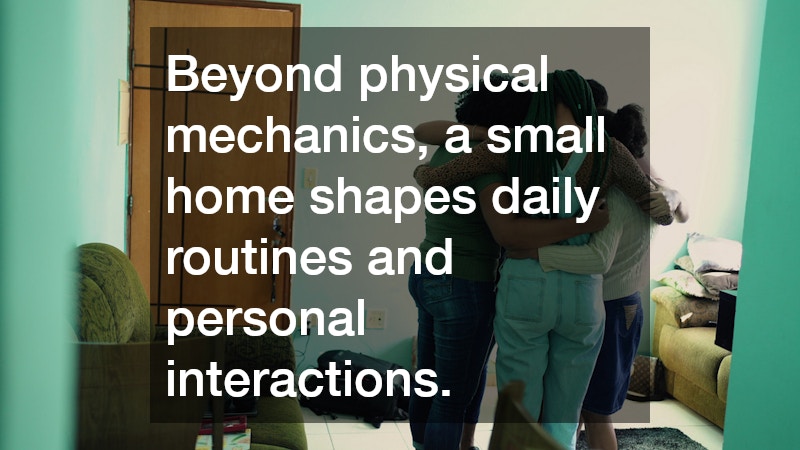
Beyond physical mechanics, a small home shapes daily routines and personal interactions. With less physical distance between rooms, household members naturally engage more frequently. While this requires clear boundaries and thoughtful noise management, it often builds a stronger sense of connection and togetherness.
Additionally, living in a small home encourages a more mindful approach to consumption. When physical capacity is finite, every potential purchase is evaluated against available space. Impulsive buying decreases and items brought into the property are usually functional, meaningful or both. This shift away from excess accumulation often leads to a lighter, less cluttered lifestyle.
Embracing a Unique Rhythm
Ultimately, a small home functions through a thoughtful blend of multi-use design, intentional storage and efficient energy usage. It challenges the conventional idea that bigger is always better, demonstrating that a well-designed interior can provide comfort, functionality and style regardless of size. By embracing the distinct operational characteristics of a small home, residents can enjoy a streamlined, practical and highly rewarding way of living.